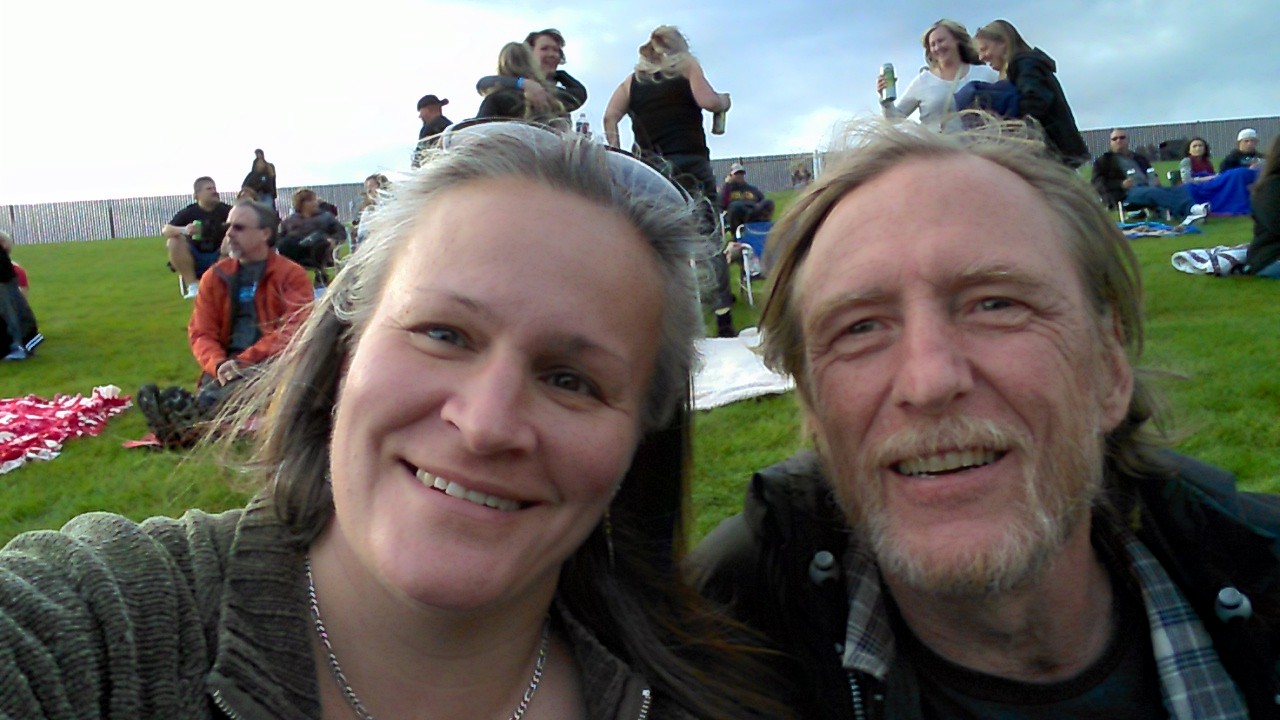
Well, here we are two days after Christmas Day, still alive and kicking through all the holiday hubbub. The fact that I have not posted here for two full weeks is some indication of how far behind I feel in many ways! My plan was to post once or twice a week, which was perhaps a bit too ambitious for my current energy level during a holiday season, but better late than never, right? Ok. So, here is what has been going on here during weeks five and six post-stroke.
First, let me say that the Strokeboard.net organization has been an amazing lifeline to me. Through talking with others who have experienced strokes of various kinds and with every level of outcome, I have been greatly encouraged. Some days are just harder than others and being able to chat with folks who have similar experiences makes me feel like less of a weirdo and reaffirms that I am getting better all the time.
One of my amazing discoveries these last two weeks has been how many things I have always done on "auto-pilot", but now must re-learn from scratch. For example, I decided that wearing my running shoes would probably provide more support to my left foot and help me to avoid turning that ankle. Stability, or rather the lack thereof, in my left foot and ankle is an issue because I can't feel anything there yet. That numbness would make it very easy for me to injure myself without realizing it. Well, what I had not considered until I was right there putting on my shoes was that I couldn't remember how to tie a bow! I could tie a knot just fine, but the bow completely eluded me. Fortunately a dear friend was here t the time and walked me through it several times unail I do it myself...until the next time I tried, and had already forgotten again. Enter: Youtube! A quick search brought me to a video of a Mom teaching children to tie their shoes. Yay! So back to kindergarten I went and tied my shoes about twenty times u til I was sure I had it this time. No dice. Round three found me on the edge of the bed with my for propped on the seat of my walker and that Youtube video playing right next to me. Voila! You would have thought I had won the lottery by the way I whooped and hollered! My Mom reminded me to celebrate every victory, no matter how small...though I considered being able to put on my own shoes to be kind of a big deal. (Thanks, Mom!)
Another victory came in the form of a large spring-clip barrette for my hair. This might seem miniscule, but if you have ever tried to put long hair in a ponytail with one hand refusing to cooperate with twisting a run berband, you now what I'm talking about! I briefly considered just having it cut short, but that seemed a bit drastic. Ever fear, barrettes are here! I can get all my hair pulled into it and clip it with my right hand! No more hair hanging in my face anymore. Another small/huge victory! Fingernail clippers are a whole different story that I won't even go into for fear of stressing myself out just thinking about it and causing myself another stroke.
Just before Christmas I actually finished the crocheted bedspread I had been working
on for over a year. This is actually a miracle of sorts not only because I go at the pace of a snail on queludes, but because I realized suddenly that I couldn't remember what the stitch symbols meant even if my life depended on it! Ugh. So I read the worded pattern over and over while I looked at the portion I had already done until I figured out how to proceed. What usually would have taken me one day to finish instead took me two weeks...but it's done!
Most people tell me they can't tell by my speech that anything happened to me, and I am so grateful for that. I notice the difference because I have to think so much when I'm speaking, to make sure what I'm saying makes sense. Now and then a completely incorrect word jumps out of my mouth before I can catch it, such as saying "Have a great evening" when I MEANT to say, "Have a good morning", etc. Or just losing a word or phrase entirely...now THAT gets frustrating. I changed my passwords on every computer-related account I have and kept a list of them because I couldn't remember any of the old ones. I even scrambled my own email address, though I have used that same address for over six years! I have become the Queen Of Cheat Sheets, and my kingdom is ruled by reminders to heck my reminders bout the reminders that tell me what I am supposed to be doing at any given time.
One reminder recently kept me on track to wrap Christmas gifts! Forget the fancy
shmancy bows and such, I was doing well to get some paper onto them and a name tag so each goes to the correct recipient. Scott was immensely helpful, making sure all the paper, tape, scissors, etc were in easy reach and reminding me to stop when I started to appear tired. Honestly, I don't know what I would do without him. Not just for physically helping me with things I really can't do yet, but reassuring me when I feel frustrated. It is hard some times to separate the facts of reality from my emotions. I know that I am not a stupid person, but when I have trouble tying my shoes, re-capping the toothpaste, or pouring water into a glass it is easy to feel like the first prize winner of the Dunce Award.
Meanwhile, I have finished one adult coloring page and Scott gave me a new set of coloring postcards in garden themes! Not just for the kiddos anymore, I have discovered the amazing hobby of coloring in books designed for adults. Some are far too detailed and definitely beyond my coordination just yet, but it is very good for relieving stress and helping me to see a project through to completion. The post cards also fit perfectly with my desire to send frequent handwritten notes to loved ones!
Now if anyone is interested in the techie stuff, I am seeing improvement in my left arm and hand. Coordination has improved and it only curls up tight when I get really tired. I have a great deal more strength than I did six weeks ago, though I still avoid holding anything in my left hand that would be a problem if dropped. My leg is coming along a bit slower but there is improvement there, too. I have an ankle brace that holds my foot close to a 90 degree angle so my toes don't drag when I walk. This makes it much less tiring to get around and saves my ankle and knee from possible injury. My energy level is still below the basement. I am told this is normal, as it takes six months just for the brain to heal and inflammation to subside. Hence, naps have been commonplace and I often sleep twelve hours a day or more. Headaches are also a constant norm, but if I pay attention and rest when I need to they don't always become severe. My vision is still a major adjustment. Lack of depth perception is always disconcerting and results in my bumping into things quite easily as I learn to judge distances. I can read for short periods of time without triggering a new headache, so I save up "eyeball energy" when I want to read before bed.
If I seem to have moved to Hermitville USA, you are at least partly correct. Loud noises, lots of movement, crowds, fluorescent lights, multiple people talking at once, are all a recipe for an anxiety meltdown for me. The healthy human brain can only process a certain amount of input at any one time...an injured human brain can process far less, so sensory overload sets in quite quickly. No one should feel slighted or as if I am uninterested if I decline an invitation of any sort, as I am just trying to engage in activities that work for me and avoid those that don't. Hanging out with a friend for a while might be just fine for me, while visiting with a group where there is also music in the background and lots of moving around might send me right into a tailspin. One thing I have learned is that things that are overwhelming today might be okay next week, so I take it slow and give my brain time and space to heal.
That's about it in a nutshell! If we happen to meet, my shoes might be untied, I still can't get my earrings back in, and I may have forgotten exactly why we were meeting in the first place! But in the words of my brother Sonny, I am a Perencevic...and "Perencevics don't break, we bounce!". Some days feel like treading water and barely keeping my chin above the waves, while other days are more positive. Seems like the ebb and flow of the tides, controlled by a very fickle moon.
I appreciate your comments and emails, so please feel free to say hello before you go! And always remember:
"The sky is NOT the limit...there are footprints on the moon."
Showing posts with label Stroke journal. Show all posts
Sunday, December 27, 2015
Who knew tying a bow would be difficult?
Sunday, December 13, 2015
Really, I'm not trying to be the Grinch!
Well, here we are again. I have been very blessed to have joined a support group through Strokenetwork.org, and am learning a ton from other's experiences and wisdom. Like most things, learning from someone who has actually experienced something is far more helpful in some ways than random theoretical knowledge.
A few people close to me have asked about not only "how I'm feeling", but also about particular things that are helpful or botnersome, if there are things I want to do but need help with, and even why the heck I sometimes suddenly just "hit the wall" and fall asleep. Hopefully this entry will answer some of those questions.
Now, anyone who knows me personally understands that I am usually the Queen of Multitasking. If I am watching a movie, I am also crocheting or catching up on emails. I very often have music playing while I am cleaning or cooking, and having laundry running through while baking bread is very common. Or it WAS common, anyway! One definite change my stroke has brought to me is that of singular thinking...multitasking is OUT.
Let's say for example, I am crocheting. I have crocheted most of my life and have written scores of original patterns. I can usually figure out a stitch pattern just by looking closely at a finished piece. Nowadays, I have a two-pronged battle: my weak and uncoordinated left hand, and my thought process. While my hand will cooperate if I work slowly and take frequent breaks, my brain struggles with remembering patterns, counting stitches, and generally keeping the entire piece pattern in mind. Add to that any extra noise or distraction and I lose count and have
to pull a section out and do it again. Finding a mistake in the middle and figuring out a way around it is just not going to happen! So, while crocheting is a treasured activity to me and is now excellent therapy for my left hand as well as my eye/hand coordination, it can also be a source of great frustration as I learn patience to do something I used to do easily without thought.
About that "eye/hand coordination"...
I have a thermal coffee mug with a screw-on lid, perfect for avoiding spills as I carry my cup in the basket of my walker. Here's the catch: I have to stop and think about which way to turn the lid to screw it on. Duh, right? "Righty tighty, lefty loosey"! Yeah, well sometimes left and right directions, especially in a circular motion get lost somewhere and it takes a minute to get that lid on. In the meantime, avoiding spills of a hot liquid is obviously important, especially since my left hand is entirely numb so I would not know immediately if I had burned myself.
But forget about the coffee mug. What about other things that engage eye/hand coordination that we rarely give a second thought? Here is a short list of things that used to be a no-brainer but that now require real effort:
Plugging in a cell phone charger...
Filling a teapot without spilling water all over...
Pouring sugar onto a spoon to put into a cup of coffee...
Capping and uncapping anything with a screw-on lid (remember the coffee mug?)...
Reaching for things that are on the floor without losing balance and falling over...
Typing (Yes, this one is a killer for me)...
Tying a shoelace, or basically tying anything into a bow...
Using a handheld pencil sharpener...
Cutting anything with a sharp knife (same caution as with hot water)...
Peeling an orange (who knew this required thought??)...
Buckling a bra (not happening at all)...
Navigating a stairway...
Reading regular sized type...
There are undoubtedly more things that could go on this list, but you get the idea.
Those are some of the ordinary day-to-day challenges, so let's move on to another inevitable event: shopping! (Shudder) Doesn't everyone want to get out of the house when they have been cooped up for a while? Of course! Especially this time of year, it can be a lot of fun being out and about, seeing the sights, and running errands. At least it always was before. Nowadays there are a few challenges I had not foreseen but am learning to compensate for.
First off, the concept of "sensory overload". We are literally bombarded with sights, sounds, smells, different surfaces for walking on, temperature fluctuations, and various versions of hubbub. Usually these are taken in stride, processed as our brain perceives them and either given attention if necessary or ignored as we pass by. But what happens when the brain cannot easily filter all that stimuli can be a pretty intense experience, and not in a fun way!
Consider the average grocery market. Even during a non-holiday season, they are busy places...during the holidays they become a constant assault on the senses. Ordinarily, I would perceive all this commotion as just a "really busy store" but now it can lead to headaches, fatigue, anxiety, nausea, and an all-out desire to bolt for the door if I could only walk or run without assistance. For now, I limit my excursions to such places because the exhaustion that follows is too high a price to pay for a frivolous trip out. When I DO go out, sunglasses and earplugs are my friends! Dimming the lights and reducing the noise helps a lot, and I try to avoid getting stuck in crowds. Too much bustling and general movement around me is overwhelming, so staying to the periphery is also helpful.
While adjusting to the vision reducton is a little challenging, almost more troublesome is the utter lack of depth perception. Our understanding of our presence in a given space is based on the relation of other objects around us inside that space. So, sitting in a room that also contains a sofa, a chair, a television, a bookcase, and a coffee table, we perceive the entire room and our place in it based on the relation of all of those objects. Even the size of the room is hinted at by the size of the objects in it and how close they are to each other. Now imagine that your perception of those sizes and distances is warped. You cannot determine if the couch is near or far away, therefore it's size means nothing (Usually the further away an object is, the smaller it appears). The coffee mug on the table might be only a few feet or actually several feet away, and misjudging that distance could result in knocking the mug over and burning oneself with hot liquid. Now add a few more people to the room. People usually move eventually, so you could have three moving people in a room full of objects. And they might be talking, adding the distraction of sound to the equation. Got that? Ok, take it one step further and imagine that room being an entire commercial store full of vastly more items, sounds, lights, and moving objects...and you can't tell how near or far any of them are in relation to you, or exactly where the sounds you hear are coming from.
Still with me? I will add just one more thing, and that is the complete inability to
leave the scene alone. So now you are overwhelmed, need to find a quiet space without bright lights, and unfortunately you might not be physically able to leave on your own without assistance. That feeling of being somewhat helpless in an overwhelming g situation, unless you truly enjoy a lifestyle of being molly-coddled (definitely NOT me!), can be an exhausting trial. Bear in mind, that helpless feeling pervades many ordinary daily activities which definitely leads to times of emotional slumps, discouragement, and sadness for me. Everyone else I have asked about this have shared similar emotional difficulties at various points in their recovery. One new friend shared with me that she had a particularly hard day recently and a family member rather flippantly suggested she go soak in a hot bath and "chill out". She said she almost cried as she thought about the effort it would take to even get into the bath, as well as the fact that she would still need help getting out of the tub at the end. She was already exhausted and adding more fatigue seemed simply intolerable. Sometimes even the soothing comforts we remember enjoying in the recent past can be more work than solace.
Speaking of exhaustion, I will wrap up with the subject of fatigue. We have all experienced the awesome feeling of tiredness resulting from hard work, perhaps studying for long hours as a student, or the deep fatigue following childbirth or a serious illness. Stroke, like any brain injury, carries what for me has been a feeling of fatigue unlike any I have ever known. As the brain itself has been injured, it makes sense that fatigue will occur as cells are rejuvenated, inflammation subsides, and nerves begin to connect and function again. As we talked about the sensory stimulation constantly occurring, there is also fatigue associated with that overstimulation. Add to that the extra physical effort required for tasks such as walking, sitting/standing, and generally moving about during the course of a day, and you have a recipe for one extremely draining daily experience. Throw in daily physical therapy exercises and the mental fatigue of figuring out new ways to do all the thingsthat need to be done, and the proverbial "wall" looms large just waiting to be slammed into. The fact that it makes sense that this fatigue is normal does not make it any less troublesome to deal with every day.
Why am I sharing all of this? Quite simply, things we don't understand tend to be either frightening, irritating, or some combination of the two. If you are a stroke survivor, you could add many of your own thoughts to mine here and you understand the challenges I describe. If you have a loved one recovering from a stroke, you have probably been irritated as a chicken with fleas by things that "shouldn't be a big deal" or even by the moodiness that so easily befalls your loved one as they navigate these waters. It is extremely difficult on both sides.
Imagine receiving a great big
model ship kit as a gift. What fun it will be to put it together! Until someone dumps all the tiny pieces out into a big pile on the floor, hands you the glue, then walks away...taking with them the picture of what the ship is supposed to look like as well as the directions for assembling it! You shake your head and stare at the pile in utter confusion. This is what recovering from a stroke can feel like at times. If your loved one is a stroke survivor, remember that YOU still have access to that finished picture and the directions for assembling that ship...your loved one does not. They are not trying to be difficult or unkind, they may very well be overwhelmed with the immensity of the task before them. None of us can tell anyone else "how to do this stroke recovery thing" from EITHER side. But a little understanding goes a long way...I am not trying to be the Grinch, really!
As I mentioned above, I am so blessed to have great support from family, friends, and a wonderful stroke support organization. I am grateful to all of you who are following this journey with me, and I welcome your comments, questions, and suggestions, either here on this entry or send me a private email.
Onward and upward,
Lorrie
"Be kind, for everyone you meet is fighting a hard battle."
A few people close to me have asked about not only "how I'm feeling", but also about particular things that are helpful or botnersome, if there are things I want to do but need help with, and even why the heck I sometimes suddenly just "hit the wall" and fall asleep. Hopefully this entry will answer some of those questions.
Now, anyone who knows me personally understands that I am usually the Queen of Multitasking. If I am watching a movie, I am also crocheting or catching up on emails. I very often have music playing while I am cleaning or cooking, and having laundry running through while baking bread is very common. Or it WAS common, anyway! One definite change my stroke has brought to me is that of singular thinking...multitasking is OUT.
Let's say for example, I am crocheting. I have crocheted most of my life and have written scores of original patterns. I can usually figure out a stitch pattern just by looking closely at a finished piece. Nowadays, I have a two-pronged battle: my weak and uncoordinated left hand, and my thought process. While my hand will cooperate if I work slowly and take frequent breaks, my brain struggles with remembering patterns, counting stitches, and generally keeping the entire piece pattern in mind. Add to that any extra noise or distraction and I lose count and have
to pull a section out and do it again. Finding a mistake in the middle and figuring out a way around it is just not going to happen! So, while crocheting is a treasured activity to me and is now excellent therapy for my left hand as well as my eye/hand coordination, it can also be a source of great frustration as I learn patience to do something I used to do easily without thought.
About that "eye/hand coordination"...
I have a thermal coffee mug with a screw-on lid, perfect for avoiding spills as I carry my cup in the basket of my walker. Here's the catch: I have to stop and think about which way to turn the lid to screw it on. Duh, right? "Righty tighty, lefty loosey"! Yeah, well sometimes left and right directions, especially in a circular motion get lost somewhere and it takes a minute to get that lid on. In the meantime, avoiding spills of a hot liquid is obviously important, especially since my left hand is entirely numb so I would not know immediately if I had burned myself.
But forget about the coffee mug. What about other things that engage eye/hand coordination that we rarely give a second thought? Here is a short list of things that used to be a no-brainer but that now require real effort:
Plugging in a cell phone charger...
Filling a teapot without spilling water all over...
Pouring sugar onto a spoon to put into a cup of coffee...
Capping and uncapping anything with a screw-on lid (remember the coffee mug?)...
Reaching for things that are on the floor without losing balance and falling over...
Typing (Yes, this one is a killer for me)...
Tying a shoelace, or basically tying anything into a bow...
Using a handheld pencil sharpener...
Cutting anything with a sharp knife (same caution as with hot water)...
Peeling an orange (who knew this required thought??)...
Buckling a bra (not happening at all)...
Navigating a stairway...
Reading regular sized type...
There are undoubtedly more things that could go on this list, but you get the idea.
Those are some of the ordinary day-to-day challenges, so let's move on to another inevitable event: shopping! (Shudder) Doesn't everyone want to get out of the house when they have been cooped up for a while? Of course! Especially this time of year, it can be a lot of fun being out and about, seeing the sights, and running errands. At least it always was before. Nowadays there are a few challenges I had not foreseen but am learning to compensate for.
First off, the concept of "sensory overload". We are literally bombarded with sights, sounds, smells, different surfaces for walking on, temperature fluctuations, and various versions of hubbub. Usually these are taken in stride, processed as our brain perceives them and either given attention if necessary or ignored as we pass by. But what happens when the brain cannot easily filter all that stimuli can be a pretty intense experience, and not in a fun way!
Consider the average grocery market. Even during a non-holiday season, they are busy places...during the holidays they become a constant assault on the senses. Ordinarily, I would perceive all this commotion as just a "really busy store" but now it can lead to headaches, fatigue, anxiety, nausea, and an all-out desire to bolt for the door if I could only walk or run without assistance. For now, I limit my excursions to such places because the exhaustion that follows is too high a price to pay for a frivolous trip out. When I DO go out, sunglasses and earplugs are my friends! Dimming the lights and reducing the noise helps a lot, and I try to avoid getting stuck in crowds. Too much bustling and general movement around me is overwhelming, so staying to the periphery is also helpful.
Speaking of periphery, let's discuss vision for a minute. I experienced an ischemic stroke in the right side of my brain, so the left side of my body is affected. My vision is affected toward the left side of my visual field. This means that I lost the left-most portion of my vision...the far outside in my left eye, and the far inside in my right eye. Neither of these are horrific losses except that I already had a peripheral vision loss in my right eye unrelated to the stroke, so the vision in that eye is now reduced to one very small area in the center. Imagine looking down a long, dark corridor to a small open doorway in the middle.
While adjusting to the vision reducton is a little challenging, almost more troublesome is the utter lack of depth perception. Our understanding of our presence in a given space is based on the relation of other objects around us inside that space. So, sitting in a room that also contains a sofa, a chair, a television, a bookcase, and a coffee table, we perceive the entire room and our place in it based on the relation of all of those objects. Even the size of the room is hinted at by the size of the objects in it and how close they are to each other. Now imagine that your perception of those sizes and distances is warped. You cannot determine if the couch is near or far away, therefore it's size means nothing (Usually the further away an object is, the smaller it appears). The coffee mug on the table might be only a few feet or actually several feet away, and misjudging that distance could result in knocking the mug over and burning oneself with hot liquid. Now add a few more people to the room. People usually move eventually, so you could have three moving people in a room full of objects. And they might be talking, adding the distraction of sound to the equation. Got that? Ok, take it one step further and imagine that room being an entire commercial store full of vastly more items, sounds, lights, and moving objects...and you can't tell how near or far any of them are in relation to you, or exactly where the sounds you hear are coming from.
Still with me? I will add just one more thing, and that is the complete inability to
leave the scene alone. So now you are overwhelmed, need to find a quiet space without bright lights, and unfortunately you might not be physically able to leave on your own without assistance. That feeling of being somewhat helpless in an overwhelming g situation, unless you truly enjoy a lifestyle of being molly-coddled (definitely NOT me!), can be an exhausting trial. Bear in mind, that helpless feeling pervades many ordinary daily activities which definitely leads to times of emotional slumps, discouragement, and sadness for me. Everyone else I have asked about this have shared similar emotional difficulties at various points in their recovery. One new friend shared with me that she had a particularly hard day recently and a family member rather flippantly suggested she go soak in a hot bath and "chill out". She said she almost cried as she thought about the effort it would take to even get into the bath, as well as the fact that she would still need help getting out of the tub at the end. She was already exhausted and adding more fatigue seemed simply intolerable. Sometimes even the soothing comforts we remember enjoying in the recent past can be more work than solace.
Speaking of exhaustion, I will wrap up with the subject of fatigue. We have all experienced the awesome feeling of tiredness resulting from hard work, perhaps studying for long hours as a student, or the deep fatigue following childbirth or a serious illness. Stroke, like any brain injury, carries what for me has been a feeling of fatigue unlike any I have ever known. As the brain itself has been injured, it makes sense that fatigue will occur as cells are rejuvenated, inflammation subsides, and nerves begin to connect and function again. As we talked about the sensory stimulation constantly occurring, there is also fatigue associated with that overstimulation. Add to that the extra physical effort required for tasks such as walking, sitting/standing, and generally moving about during the course of a day, and you have a recipe for one extremely draining daily experience. Throw in daily physical therapy exercises and the mental fatigue of figuring out new ways to do all the thingsthat need to be done, and the proverbial "wall" looms large just waiting to be slammed into. The fact that it makes sense that this fatigue is normal does not make it any less troublesome to deal with every day.
Why am I sharing all of this? Quite simply, things we don't understand tend to be either frightening, irritating, or some combination of the two. If you are a stroke survivor, you could add many of your own thoughts to mine here and you understand the challenges I describe. If you have a loved one recovering from a stroke, you have probably been irritated as a chicken with fleas by things that "shouldn't be a big deal" or even by the moodiness that so easily befalls your loved one as they navigate these waters. It is extremely difficult on both sides.
Imagine receiving a great big
model ship kit as a gift. What fun it will be to put it together! Until someone dumps all the tiny pieces out into a big pile on the floor, hands you the glue, then walks away...taking with them the picture of what the ship is supposed to look like as well as the directions for assembling it! You shake your head and stare at the pile in utter confusion. This is what recovering from a stroke can feel like at times. If your loved one is a stroke survivor, remember that YOU still have access to that finished picture and the directions for assembling that ship...your loved one does not. They are not trying to be difficult or unkind, they may very well be overwhelmed with the immensity of the task before them. None of us can tell anyone else "how to do this stroke recovery thing" from EITHER side. But a little understanding goes a long way...I am not trying to be the Grinch, really!
As I mentioned above, I am so blessed to have great support from family, friends, and a wonderful stroke support organization. I am grateful to all of you who are following this journey with me, and I welcome your comments, questions, and suggestions, either here on this entry or send me a private email.
Onward and upward,
Lorrie
"Be kind, for everyone you meet is fighting a hard battle."
Friday, December 4, 2015
Lorrie's stroke recovery journal
I have been blessed in countless ways by the loving attention of family and friends from the very beginning! From the gal pal who brought me from the hospital to stay at her home for five days until I could handle being alone at my own house part of the time, to my Mom who came bearing an amazing walker and the much-needed power of a mother's presence...from the daily and constant support of my Beloved Scott who lets me vent my bouts of frustration, to the dear friend who brought me coloring materials and sat nearby while I napped so I wouldn't be alone my first day back at home...the list could go on and on.
This journal will be a work in progress. I want to remember not only the clinical details and medical issues, but also the ups and downs and learning curves that have already begun to teach me so much. I want to be thankful, but also honest...so I suspect that not every entry here will be enjoyable to read. I want to wring out the irritation and pain of this whole situation, the worry and uncertainty, and extract whatever wisdom may come of it all. I actually have very little idea how to go about that, so I hope you will bear with me as I figure it out along the way.
I do know this for certain: Humans are wrapped around ego. The dictionary defines "ego" as: "the 'I' or self of any person; a person as thinking, feeling, and willing, and
distinguishing itself from the selves of others and from objects of its thought. The part
of the psychic apparatus that experiences and reactsto the outside world and thus
mediates between the primitive drives of the id and the demands of the social and
physical environment."
Everything about ourselves, all the qualities that make up our personalities and preferences, the intrinsic details that fashion our being and make each of us different from everyone else, we cling to that identity, protect it, keep it safe. In the early evening of November 7, my ego took a hit. As I sit here writing this, my leg seems detached from me and will not hold me up. My hand can type slowly until it spasms and I must stop. I am exhausted all the time, but have difficulty sleeping at night. I can't quite get my left arm and hand to cooperate enough to put my hair into a ponytail...yet. But even so, I know there are other people in the world who fight daily battles far more severe than mine and knowing that gives me perspective. My battles are real, no doubt about it, but every day the world keeps on turning and life presses onward regardless of me.
Maybe these are lessons more humans need to learn: the balance between our seeming insignificance in a world inhabited by billions of people, and the inestimable value of just one single human being. It is a fine line that divides self-centeredness and self-awareness, between wallowing in self-pity when difficulties come and allowing oneself time and space to rest and heal. They are definitely lessons I am learning.
I hope you will follow my journey of recovery as I discover the many facets of stroking my ego. (A play on words, I couldn't resist. Well, I could have. I just didn't! Sometimes all you can do is laugh.)
Thanks for reading,
Lorrie
"The sky is NOT the limit...there are footprints on the moon."
Subscribe to:
Posts (Atom)